Learn, prepare and step confidently into the operating theatre
Understanding theatre basics
There are many different types of equipment, rooms and staff in the operating theatre. On this page, there is a brief overview of some of the rooms that you may encounter in theatre, the roles of the different staff members and the type of equipment used during surgery.
The quiz will involve questions from this page!
The Operating Theatre Layout
Hover / click to reveal more – but first, take a guess!
Operating Theatre
Operating Theatre
Where the actual surgery happens, has the patient in the centre and the team around them.
Scrub Room
Scrub Room
This is directly next to the operating room and is the location for the surgeons and scrub nurses to scrub in so they are completley sterile.
Anaesthetic Room
Anaesthetic Room
A room in very close proximity to the operating room. This is where the patient is given the anesthetic by the anesthetist and from there is moved into the operating room. Note not to walk in there when patient is being anesthetized
Storage Room
Storage Room
Next to the operating room, where tools and instruments are kept safely and securely along with any required medications or cleaning equipment.
The Operating Theatre Team
Hover / click to reveal more – but first, take a guess!
Consultant Surgeon
Consultant Surgeon
Overall responsible for managing care of the patient and leads the team. The consultant surgeon actually performs the surgery and is assisted by the team around them.
Surgical Registrar
Surgical Registrar
Undergoing training to become consultant surgeon, under supervision of the consultant surgeon and plays a huge part in the surgical procedure. Will usually be next to or opposite the lead consultant surgeon.
Anaesthesiologist
Anaesthesiologist
Specially trained doctor who administers the anesthesia and maintains focus on the patients vital signs, taking part in all stages of the surgery.
Scrub Nurse
Scrub Nurse
Specially trained nurse to support the consultant surgeon and surgical registrar by handing different tools and equipment while maintaining a sterile environment.
HCAs & Nurses
HCAs & Nurses
Support various parts of the surgery, manage patient care before and after the surgery.
Radiologist
Radiologist
Essential to provide imaging during surgery, hugely prominent in orthopaedic surgeries.
Physiologist
Physiologist
Closely monitoring the patient’s physiology (such as heart activity) to provide critical information to the surgeon and anaesthetic team.
The Operating Theatre Equipment
Click to reveal more – but first, take a guess!
Click on something to find out what it is and what it does!
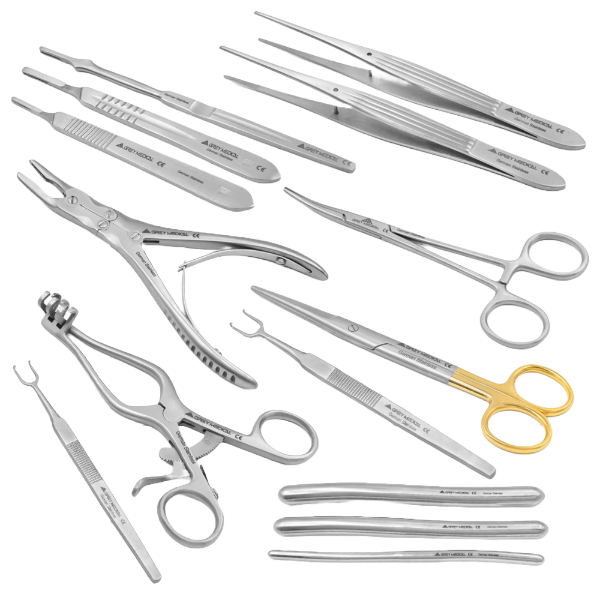
Surgical Scalpel
A very sharp knife used for making precise insicions. Surgeons will use this to cut skin and soft tissue cleanly.
Surgical Scissors
Used to cut tissues, sutures or other materials in surgery. Some are sharp-ended (for tougher tissue) and some are dull-ended (for more delicate dissections).
Surgical Forceps
Tweezer-like instrument to hold materials or tissue, allowing adjustments for the surgeon to work around.
Surgical Clamps
Used to compress blood vessels or tissues to control bleeding. Additionally used to hold things in place.
Surgical Retractors
Allows holding back of tissue, organs or skin to give the surgeon better visibility and access to what needs to be operated on.
Surgical Probes and Dilators
Probs are used to explore wounds, tracts or cavities. Dilators are used to gradually widen an opening (such as a vessel) for easier access. They are usually used in harmony.
Surgical Rongeurs
A heavy-duty sharp-edged instrument used to cut away tough tissue.